Friday, November 09, 2012

Aging (GSA) Meeting in San Diego, November 15-18

Dear Friends and Colleagues,

If you plan to attend annual meeting of the Gerontological Society of America (GSA) in San Diego on November 15-18, we would like to invite you to three GSA events there with our participation:

(1) Thursday, November 15, 2012, 8:00 AM-9:30 AM, Room 7A (San Diego Convention Center)
      Symposium "Frailty: from the Cell to Society"
      L.A. Gavrilov, N.S. Gavrilova "Familial Factors in Longevity: Exploring Complex Environmental and Genetic Effects"

(2) Friday, November 16, 2012, 7:00 - 8:30 PM, Room 14B (San Diego Convention Center)
     GSA Interest Group Meeting "Societal Implications of Delaying Aging." 
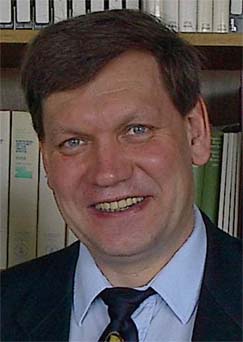
      Convener: Leonid Gavrilov
     Abstract:  Foreseeable interventions against aging would constitute true preventative medicine for diseases and disabilities of old age. Learned debate on the immense social implications is thus timely at GSA, challenging biologists, clinicians and sociologists to    explore an area where their expertise particularly intersects. Informal round table discussion

(3) Sunday, November 18, 2012, 8:00 AM-9:30 AM, Room 1A (San Diego Convention Center)
     Symposium "Biodemography of Aging and Longevity"
     N.S. Gavrilova, L.A. Gavrilov  "Biodemography of Old-Age Mortality in Humans and Rodents"

Feel free to disseminate this invitation among your colleagues, who may be interested.

Hope to see you there!

Kind regards,

-- Leonid

-------------------------------------------------
 -- Leonid Gavrilov, Ph.D., GSA Fellow
 Convener for Interest Group "Societal Implications of Delayed Aging"
 Center on Aging, NORC at the University of Chicago
 Website: http://longevity-science.org/
 Blog: http://longevity-science.blogspot.com/
 

Labels: , , , , ,

Wednesday, March 25, 2009

An Unusual Source of Inspiration

See also:
-- 'Books Forum' blog
-- 'Health Studies' blog


Greetings,

I wonder what kinds of inspiration do you have in your life and research activities? Is it a great music, inspiring picture, absorbing book, scenic views, and/or a significant other?

Recently I have encountered a new unusual source of inspiration -- the NIH Summary Statement! Usually it is considered to be a bureaucratic document, which summarizes the results of a closed discussion of your research proposal by the panel of experts at the National Institute of Health, NIH. Typically this is a candid anonymous review, which is often painful to read to a scientist, the author of the reviewed proposal.

However, this time things are completely different. Our new research project was thoroughly evaluated by a review panel of 20 experts at NIH and the project was rated as being among the best 5 percent of all approved (scored) applications. Here is what they wrote (excerpts):
Summary Statement for Project "Biodemography of Exceptional Longevity in the United States"

Resume and Summary of Discussion:

"This ... application, by an eminent investigator, would use a variety of modeling methods to determine the social and biological factors linked to living to age 100. This is a major question for all fields of aging research. It is highly innovative application because it is going to examine a large relatively representative sample of those who reach 100. The approach is well-suited to the aims of the project. ... Strengths of the application include the significance of the aims, an innovative and carefully considered research design, a solid research team, supporting pilot research and well specified analytical methods. "


Critique 1:

Significance:
"This ... application, addresses early life covariates of extreme longevity in the U.S. This is a significant research topic with potential implications for health intervention in premature mortality and the proposed research could provide important confirmation, or refutation, of many theorized early life covariates of longevity."

Approach:
".... this is an innovative application utilizes genealogical, census, social-security, Internet and military data in a well crafted research design. "

Innovation:
"The application is an innovative one with a creative sample construction."

Investigators:
"This is an outstanding research team with an eminent Principal Investigator."

Overall Evaluation:
"This ... application, by an eminent investigator, would use a variety of modeling methods to study the effect of early life course circumstances on cases of extreme longevity in the United States. Strengths of the application include the significance of the aims, an innovative and carefully considered research design, a solid research team, supporting pilot research and well specified analytical methods."


Critique 2:

Significance:
"... a highly significant application. The project addresses important questions with an extremely innovative approach. Why some people live to 100 and others do not has been a focus of much NIA research, although much of this longevity research has been performed on other species. This application will provide increased understanding of how humans survive to very old ages using representative populations."

Approach:
"This application is harnessing the resources available on the Internet to address a very important scientific question. How do both social and biological factors affect the likelihood of living to very old age. The investigators have an unusually thorough command of both biological and the social literature appropriate to this question. The project will result in the examination of about 3,000 centenarians. Information on their early, adult, and later life is available. The combination of Census, Army, and Genealogical data is truly exciting. In addition, areal level data will be appended which has not been done before in analyses of long lives."

Innovation:
"The project is quite exciting because of the careful planning behind the proposed collection of available data in a novel way to address an important question which has not been well-addresses to date."

Investigators:
"This is an excellent team. The Principal Investigator, Leonid Gavrilov, is well-recognized as a biologist but he has made remarkable strides in becoming very multidisciplinary through the mechanism of a K award. The co Principal Investigator, Gavrilova, is also well-recognized as a biologist with many important publications related to the project. She, too, has undertaken recent training by getting a master's in computer science from the University of Chicago. This application builds on this strength in its approach to data collection."

Overall Evaluation:
"This is ... application with the major goals of determining social and biological factors linked to living to 100. This is a highly significant area because this is a major question for all fields of aging research. The approach is well-suited to the aims of the project. It is highly innovative application because it is going to examine a large relatively representative sample of those who reach 100. The major strengths of the application are its innovative use of publicly available data."


Critique 4:

Significance:
"This application will attempt to identify early life characteristics, which are associated with extreme long life. This is a highly significant issue. It has significant potential, depending upon the variables identified, to inform public health policy concerning longevity."

Innovation:
"This is an innovative study. It will assemble a unique data set concerning the early life characteristics of the elderly and a set of "controls". This will be a unique and useful resource for analysis of early life effects on mortality.

Investigators:
"This is an excellent research team. Gavrilov and Gavrilova are both productive and experienced researchers in the area of human aging."

Environment:
"The environment at the University of Chicago is excellent."

Overall Evaluation:
"This is ... application by an eminent research team that will assemble and analyze a unique data set concerning early life conditions on extreme longevity. In particular, the study will focus on socio economic factors and height and build. The analysis is well described and theoretically justified for the most part."


==================

So we have now a new awarded research project of certified high scientific merit, and we are open to collaboration on this new NIH Longevity Study !

Please feel free to post your comments and suggestions below by clicking here.


Key words:
Inspiration, NIH Summary Statement, Longevity, centenarians, biodemography, NIH, NIA, longevity genes, parental age, birth order, early-life living conditions, adult physical characteristics, reproductive history, Biodemography of Exceptional Longevity, Leonid Gavrilov, Natalia Gavrilova, Center on Aging, United States, National Institute on Aging, National Institutes of Health, Social Security Administration datasets, Census data, family reconstitutions, genealogies, military draft records, early-life childhood conditions.


Home:
Longevity Science Blog
and
Longevity Science: An Unusual Source of Inspiration
Shorter weblink:
http://tinyurl.com/d9mgga
and
http://tinyurl.com/NIH-approved

.

Labels: , , , , , , , , , ,

Monday, February 23, 2009

Project Win Announcements - Biodemography of Exceptional Longevity

See also:
-- 'Books Forum' blog
-- 'Health Studies' blog


Greetings,

Here is an interesting announcement from the President's Office of the National Opinion Research Center, NORC, at the University of Chicago:

--------------
From: President's Office
To: SP-All NORC Employees
Subject: Project Win Announcements - Biodemography of Exceptional Longevity


Biodemography of Exceptional Longevity


Senior Vice President and Director of the Academic Research Centers, is pleased to announce that NORC will study why people live to be 100 years or older.

The new study Biodemography of Exceptional Longevity in the United States is led co-investigators Leonid Gavrilov and Natalia Gavrilova, Research Associates in NORC’s Center on Aging. This husband-and-wife team has written extensively on extreme longevity. Their work has recently shown that longevity can be linked to a mother’s age at her child’s birth, birthplace within in the United States and family socioeconomic background.

The investigators will look at effects of early-life conditions, adult physical characteristics, and marriage and reproductive history on exceptional longevity. The new study takes advantage of U.S. Census and Social Security Administration data, genealogies, and military draft records. Researchers at the universities of Pennsylvania, Utah, and Wisconsin will also collaborate.

The project plan’s innovative use of data was called “exciting” by one of the reviewers at the sponsoring National Institute on Aging. Reviewers also commented favorably on other aspects, notably the strength of the research team and the overall significance of the project aims. The proposal was rated as being among the top 5 percent of all scored proposals reviewed by the NIH.

To read more about the Gavrilovs longevity studies, visit their scientific website at http://longevity-science.org/ ; also you can post your questions and comments at their discussion blog at: http://longevity-science.blogspot.com/

----------------------------------------------
Key words:
Longevity, centenarians, biodemography, NIH, NIA, longevity genes, parental age, birth order, early-life living conditions, adult physical characteristics, reproductive history, Biodemography of Exceptional Longevity, Leonid Gavrilov, Natalia Gavrilova, Center on Aging, United States, National Institute on Aging, National Institutes of Health, Social Security Administration datasets, Census data, family reconstitutions, genealogies, military draft records, early-life childhood conditions, National Opinion Research Center, NORC, University of Pennsylvania, University of Utah, University of Wisconsin-Madison.


Home:
Longevity Science Blog
and
Project Win Announcements - Biodemography of Exceptional Longevity
Shorter weblink:
http://tinyurl.com/bjawmu


Links to this post:

- Longevity study to be conducted by the National Opinion Research Center


.

Labels: , , , , , , , , , ,

Monday, February 09, 2009

News Release: How Does One Reach 100? Chicago Researchers Will Study Determinants of Human Longevity

See also:
-- 'Books Forum' blog
-- 'Health Studies' blog


News Release from the Chicago University News Office:

How does one reach 100?
Research team will work toward identifying longevity determinants in NIH study

The University of Chicago Chronicle, February 5, 2009, Vol. 28 No. 9, page 3

http://chronicle.uchicago.edu/090205/study.shtml

-------------------------------------

Full text:


How does one reach 100?
Research team will work toward identifying longevity determinants in NIH study


By William Harms
w-harms@uchicago.edu
News Office


The National Opinion Research Center will study why people live to be 100 years or older through a five-year grant from the National Institute on Aging.

Previous research has shown that a number of factors can lead to a person being two or three times more likely to live to extreme old age, said Leonid Gavrilov, Research Associate at the Center on Aging at NORC. The new project, “Biodemography of Exceptional Longevity in the United States,” will build on that work, he said. Gavrilov and his wife Natalia, also a Research Associate at NORC, are co-investigators on the project.

“This project will investigate why some people manage to survive to extreme old age and help identify the biological and social correlates of exceptional longevity,” Gavrilov explained. “We hope to find out the determinants of human longevity and to get insights into mechanisms and causes of long life.

“These are important issues, not only for demographic forecasts of human mortality and population aging, but also for improving our understanding of the fundamental mechanisms of human aging and longevity.”


Centenarians are one of the most rapidly growing segments of the U.S. population, according to the National Institute on Aging. The number of centenarians is growing at a rate of 4.1 percent per year; the numbers increased 51 percent between 1990 and 2000.

The new study will take advantage of U.S. Census and Social Security Administration data, genealogies and military draft records. Gavrilov will look at early-life conditions, adult physical characteristics, and marriage and reproductive history on exceptional longevity.

Gavrilov and his wife have written extensively on extreme longevity. Their work has recently shown that longevity can be linked to a mother’s age at her child’s birth, birthplace within in the United States and family socioeconomic background.

Babies born to mothers under age 25 were twice as likely to live to 100 years of age, compared to infants born to mothers 25 or older. Farmers tend to outlive others, and men who fathered more than four children by the time they were 30 also live longer, research found.

The potential impact on exceptional longevity of early-life living conditions shows that environmental and behavioral factors cannot be overlooked in longevity studies Gavrilov said.

“Even the search for ‘human longevity genes’ could be facilitated when powerful confounding effects of childhood environment are taken into account,” he said.

Gavrilov will collaborate with researchers at the University of Pennsylvania, the University of Utah and the University of Wisconsin, Madison.

To read more about the Gavrilovs’ longevity studies, visit http://longevity-science.org.

----------------------------------------------------

Key words:
Longevity, centenarians, biodemography, NIH, NIA, longevity genes, parental age, birth order, early-life living conditions, adult physical characteristics, reproductive history, Biodemography of Exceptional Longevity, Leonid Gavrilov, Natalia Gavrilova, Center on Aging, United States, National Institute on Aging, National Institutes of Health, Social Security Administration datasets, Census data, family reconstitutions, genealogies, military draft records, early-life childhood conditions, National Opinion Research Center, University of Pennsylvania, University of Utah, University of Wisconsin-Madison.


Home:
Longevity Science Blog
and
News Release: How Does One Reach 100? Chicago Researchers Will Study Determinants of Human Longevity
Shorter weblink:
http://tinyurl.com/db4kem


.

Labels: , , , , , , , , , ,

Thursday, January 08, 2009

New NIH Longevity Study

See also:
-- 'Books Forum' blog
-- 'Health Studies' blog


Greetings,

Here are some really good news for the New Year 2009:

The US National Institutes of Health (NIH) have awarded us with a new 5-year research grant to study the mechanisms of human longevity!

Moreover, when this new research project was thoroughly evaluated by a review panel of 20 experts at NIH, the project was rated as being among the best 5 percent of all approved (scored) applications.

The details of this new award are now publicly available through CRISP (Computer Retrieval of Information on Scientific Projects), a searchable database of federally funded biomedical research projects, by clicking here, or through this weblink: http://tinyurl.com/9th6jx

Here are some slightly edited excerpts:

Project Title:
Biodemography of Exceptional Longevity in the United States


Abstract:

This project proposes to investigate why some people manage to survive to extreme old age (100+ years) and what are the biological and social correlates of exceptional longevity. These are important issues not only for demographic forecasts of human mortality and population aging, and the policy implications on health-care and pension expenditures, but also for improving our understanding of the fundamental mechanisms of human aging and longevity.

The project will take advantage of the ongoing revolution in information technology for human longevity studies to examine the determinants of exceptional survival both on individual and population levels, using a rich variety of the U.S. data sources available through the Internet, including Social Security Administration datasets, Census data, family reconstitutions and validated genealogies, and military draft records.

Recent findings from the Principal Investigator's pilot study of U.S. centenarians, funded by the Chicago Center on Aging and the Society of Actuaries, suggest that differences in chances of exceptional survival as large as two or three times can be linked to early-life circumstances, such as mother's age at person's birth, person's birth order, birth place within the United States, and family socioeconomic background.

The plasticity of exceptional longevity in response to early-life living conditions indicates that environmental and behavioral factors cannot be overlooked in longevity studies. Even the search for "human longevity genes" could be facilitated when powerful confounding effects of childhood environment are taken into account. This project therefore proposes to explore the effects of early-life living conditions, adult physical characteristics, marriage, and reproductive history on exceptional longevity, and will test a number of related biomedical and social hypotheses.

The project is designed as an interdisciplinary study of exceptional human longevity. To contribute to the research infrastructure for subsequent longevity studies world-wide, the Principal Investigator will also develop a database with integrated, matched information on longevity predictor variables, and make it available to the research community on the Internet. The project will allow establishing scientific collaboration of the Center on Aging, NORC/University of Chicago with other researchers to study the biodemography of exceptional longevity in an interdisciplinary context.


Public Health Relevance:

Demographic aging of the United States has profound public health implications, particularly because centenarians (people living to 100 and beyond) represent one of the most rapidly growing segments of the U.S. population. This study advances understanding of biological, social and environmental factors that favor survival to extreme old ages, including early-life childhood conditions, and it has implications for public health policy, population forecasting and health planning.

So we have now an approved research project of certified high scientific merit, and we are open to collaboration on this new NIH Longevity Study !

Please post your comments and suggestions below by clicking here.


Key words:
Longevity, centenarians, biodemography, NIH, NIA, longevity genes, parental age, birth order, early-life living conditions, adult physical characteristics, reproductive history, Biodemography of Exceptional Longevity, Leonid Gavrilov, Natalia Gavrilova, Center on Aging, United States, National Institute on Aging, National Institutes of Health, Social Security Administration datasets, Census data, family reconstitutions, genealogies, military draft records, early-life childhood conditions.


Home:
Longevity Science Blog
and
New NIH Longevity Study
Shorter weblink:
http://tinyurl.com/8uk8ew


Links to this post:

- NIH awards grant to longevity science blog writer


.

Labels: , , , , , , , , , ,

Sunday, November 04, 2007

International Workshop on Human Longevity -- Register Today!

Greetings,

This is to cordially invite you to attend the upcoming International Workshop on Human Longevity, which brings together experts from the United States, Malaysia, Spain, Greece, Australia and other countries. This will be a friendly meeting at relaxed academic retreat with great opportunities for broad interesting discussions -- so register today! No papers or formal presentations are required from you, and you will have an opportunity to participate in a general discussion, if you wish. Some more information about this meeting and registration details are provided below:

This International Workshop on Human Longevity will take place in Malaysia on November 26-27, 2007, and it is organized by the major Malaysian University ("Universiti Kebangsaan Malaysia -- UKM"), Department of Science & Technology.

For more details, please see:

http://pkukmweb.ukm.my/~ppsmfst/icoms/Longevity_wshop2007_poster2.pdf
Shorter weblink:
http://tinyurl.com/3xgsfj

Some excerpts:

" This workshop is intended to provide a broad overview of bio-demographic ideas, models, methods, and findings regarding human aging, mortality and longevity incorporating interdisciplinary approach. The aims are to bridge the gap between biological, mathematical and social sciences as well as nurturing the understanding and collaboration amongst the regional and global human longevity scientists and practitioners. Besides that, it also aims to demonstrate the vital role of understanding the mechanisms of aging and longevity and to extend healthy and productive human lifespan. The workshop will include several sessions and discussions on longevity, demography, genetic factors and others. We cordially invite academicians, researchers, scientists and interested parties to join this event in the serene campus of Bangi, Malaysia. We are also proud to inform you that 2007 is the official Visit Malaysia Year ! "

For additional details see also the Workshop Brochure:

http://pkukmweb.ukm.my/~ppsmfst/icoms/Longevity_wshop2007_broc2.pdf
Shorter weblink:
http://tinyurl.com/2kj4bp

Registration for this International Workshop is opened on the first-come, first-served basis, with limited number of places available. Therefore consider to register now, to make sure that you will not miss this scientific and educational brain-storming networking event!

This is also a great opportunity to take your family members with you for retreat and vacation in an exotic Asian country of Malaysia at the serene campus of Bangi there. Here are some pictures of a meeting place:

http://longevity-science.org/Malaysia-2007.pdf

Hope to see you there!

Contact address of the Organizing Committee for further enquiries:
Secretariat
Workshop on Human Longevity (WHL'07)
c/o School of Mathematical Sciences
Faculty of Science & Technology
Universiti Kebangsaan Malaysia
43600 UKM Bangi
Selangor, Malaysia
Tel: +603-8921 5713 / 5714
Fax: +603-8925 4519
E-mail: icms07@gmail.com
seminarppsm@lycos.com

Home:
Longevity Science Blog
and
International Workshop on Human Longevity -- Register Today!
Shorter weblink:
http://tinyurl.com/3ybzhn

.

Labels: , , , , , , , ,

Tuesday, October 23, 2007

Longevity Workshop -- Submit Abstracts by this Friday, October 26 !

Greetings,

This is just a friendly reminder about approaching deadline (this Friday, October 26) for abstracts submission to the International workshop on Human Longevity, in case you may be interested.

This International Workshop on Human Longevity will take place in Malaysia on November 26-27, 2007, and it is organized by the major Malaysian University ("Universiti Kebangsaan Malaysia -- UKM"), Department of Science & Technology.

For more details, please see:

http://pkukmweb.ukm.my/~ppsmfst/icoms/Longevity_wshop2007_poster2.pdf
Shorter weblink:
http://tinyurl.com/3xgsfj

Some excerpts:

" This workshop is intended to provide a broad overview of bio-demographic ideas, models, methods, and findings regarding human aging, mortality and longevity incorporating interdisciplinary approach. The aims are to bridge the gap between biological, mathematical and social sciences as well as nurturing the understanding and collaboration amongst the regional and global human longevity scientists and practitioners. Besides that, it also aims to demonstrate the vital role of understanding the mechanisms of aging and longevity and to extend healthy and productive human lifespan. The workshop will include several sessions and discussions on longevity, demography, genetic factors and others. We cordially invite academicians, researchers, scientists and interested parties to join this event in the serene campus of Bangi, Malaysia. We are also proud to inform you that 2007 is the official Visit Malaysia Year ! "

For additional details see also the Workshop Brochure:

http://pkukmweb.ukm.my/~ppsmfst/icoms/Longevity_wshop2007_broc2.pdf
Shorter weblink:
http://tinyurl.com/2kj4bp

Registration for this International Workshop is opened on the first-come, first-served basis, with limited number of places available. Therefore consider to register now, to make sure that you will not miss this scientific and educational brain-storming networking event!

This is also a great opportunity to take your family members with you for retreat and vacation in an exotic Asian country of Malaysia at the serene campus of Bangi there. Here are some pictures of a meeting place:

http://longevity-science.org/Malaysia-2007.pdf

Hope to see you there!

Contact address of the Organizing Committee for further enquiries:
Secretariat
Workshop on Human Longevity (WHL'07)
c/o School of Mathematical Sciences
Faculty of Science & Technology
Universiti Kebangsaan Malaysia
43600 UKM Bangi
Selangor, Malaysia
Tel: +603-8921 5713 / 5714
Fax: +603-8925 4519
E-mail: icms07@gmail.com
seminarppsm@lycos.com

Home:
Longevity Science Blog
and
Longevity Workshop -- Submit Abstracts by this Friday, October 26 !
Shorter weblink:
http://tinyurl.com/2x6jca

.

Labels: , , , , , , , ,

Saturday, October 06, 2007

Call for Abstracts -- International Workshop on Human Longevity, Malaysia, November 26-27, 2007

Greetings,

I am pleased to learn from the Organizing Committee that the registration deadline for the upcoming International Workshop on Human Longevity has been extended now, and the abstracts could be submitted until Friday, October 26, 2007

This International Workshop on Human Longevity will take place in Malaysia on November 26-27, 2007, and it is organized by the major Malaysian University ("Universiti Kebangsaan Malaysia -- UKM"), Department of Science & Technology.

For more details, please see:

http://pkukmweb.ukm.my/~ppsmfst/icoms/Longevity_wshop2007_poster2.pdf
Shorter weblink:
http://tinyurl.com/3xgsfj

Some excerpts:

" This workshop is intended to provide a broad overview of bio-demographic ideas, models, methods, and findings regarding human aging, mortality and longevity incorporating interdisciplinary approach. The aims are to bridge the gap between biological, mathematical and social sciences as well as nurturing the understanding and collaboration amongst the regional and global human longevity scientists and practitioners. Besides that, it also aims to demonstrate the vital role of understanding the mechanisms of aging and longevity and to extend healthy and productive human lifespan. The workshop will include several sessions and discussions on longevity, demography, genetic factors and others. We cordially invite academicians, researchers, scientists and interested parties to join this event in the serene campus of Bangi, Malaysia. We are also proud to inform you that 2007 is the official Visit Malaysia Year ! "

For additional details see also the Workshop Brochure:

http://pkukmweb.ukm.my/~ppsmfst/icoms/Longevity_wshop2007_broc2.pdf
Shorter weblink:
http://tinyurl.com/2kj4bp

Registration for this International Workshop is opened on the first-come, first-served basis, with limited number of places available. Therefore consider to register now, to make sure that you will not miss this scientific and educational brain-storming networking event!

This is also a great opportunity to take your family members with you for retreat and vacation in an exotic Asian country of Malaysia at the serene campus of Bangi there. Here are some pictures of a meeting place:

http://longevity-science.org/Malaysia-2007.pdf

Hope to see you there!

Contact address of the Organizing Committee for further enquiries:
Secretariat
Workshop on Human Longevity (WHL'07)
c/o School of Mathematical Sciences
Faculty of Science & Technology
Universiti Kebangsaan Malaysia
43600 UKM Bangi
Selangor, Malaysia
Tel: +603-8921 5713 / 5714
Fax: +603-8925 4519
E-mail: icms07@gmail.com
seminarppsm@lycos.com

Home:
Longevity Science Blog
and
Call for Abstracts -- International Workshop on Human Longevity, Malaysia, November 26-27, 2007
Shorter weblink:
http://tinyurl.com/2c8jj5


.

Labels: , , , , , , , ,

Thursday, May 31, 2007

Invited Lectures on Aging and Longevity Studies

Invited Presentations
of Leonid and Natalia Gavrilov

This page describes our experience of giving invited scientific lectures in Canada, France, Australia, England, Germany, Japan, Italy, Belgium, Netherlands, Russia, and of course in the United States -- including invited presentations at the National Institute on Aging (NIA, NIH), Harvard University, Buck Institute for Age Research, Columbia University, etc (see below).
If you are interested in our lectures, please contact us at:
gavrilov(at)longevity-science.org. Thank you!


Forthcoming:
International Workshop on Human Longevity
Universiti Kebangsaan Malaysia (UKM), Malaysia, November 26-27, 2007
Invited speakers: Dr. Leonid Gavrilov, Ph.D., and Dr. Natalia Gavrilova, Ph.D.
See official announcement and brochure.
For further details, please contact:
Secretariat
Workshop on Human Longevity (WHL'07)
c/o School of Mathematical Sciences
Faculty of Science & Technology
Universiti Kebangsaan Malaysia
43600 UKM Bangi
Selangor, Malaysia
Tel: +603-8921 5713 / 5714
Fax: +603-8925 4519
E-mail: icms07@gmail.com
seminarppsm@lycos.com


International Conference on Aging & Longevity Studies
"From Homo sapiens to Homo sapiens discatenatus"

August 27-28, 2007
Moscow State University, Moscow, Russia
Vorobievy Hills, Laboratory Korpus B, room 221
(1) Dr. Leonid Gavrilov "Aging: Reliability theory and the concept of phenoptosis"
For Power-Point Presentation click here
(2) Dr. Natalia Gavrilova "Hibernation, Aging and Longevity"
For Power-Point Presentation click here


VI European Congress of the International Association of Gerontology and Geriatrics
St. Petersburg, Russia, July 5 - 8, 2007
Hotel Pribaltiyskaya, Korablestroitelej street, 14.
"Demography of Ageing" Symposium
Saturday, July 7 at 9:00 am, Severny Hall
"Biodemographic Reliability Theory of Ageing and Longevity"
Leonid Gavrilov and Natalia Gavrilova
Click here for Power Point Presentation


Dalhousie University, Halifax, Canada
Division of Geriatric Medicine
Veteran's Memorial Building, Room 1613A
May 3, 2007 at 5:00pm
"Determinants of Exceptional Longevity"
Leonid Gavrilov and Natalia Gavrilova
Click here for Power Point Presentation.

Harvard University, Boston
Harvard School of Public Health

(1) Biodemography of Human Longevity: New Methodological Approaches
Click here for Power Point Presentation. Announcement.
(2) Biodemography of Human Longevity: New Findings and Ideas
Click here for Power Point Presentation. Announcement.
Thursday, April 26th, 4:00 - 5:30 pm.
Kresge Building, Room 110
677 Huntington Avenue

Chicago Actuarial Association Workshop, Chicago, USA
Dr. Leonid Gavrilov, Dr. Natalia Gavrilova
Invited talk: -- "Predictors of Exceptional Human Longevity"
March 13, 2007, 4:10pm
BlueCross BlueShield of Illinois
300 East Randolph Street, CAL level
Click here for Power Point Presentation.


University of Wisconsin- Madison
Center for Demography of Health and Aging (CDHA)
March 7, 2007
4308 William H. Sewell Social Science Building
L.A. Gavrilov, N.S. Gavrilova "Biodemography of Human Longevity: New Findings and Ideas"
For Power-Point presentation click here


Buck Institute for Age Research
August 4, 2006
8001 Redwood Boulevard, Novato, CA
(1) Dr. Leonid Gavrilov "Reliability Theory of Aging and Longevity"
For Power-Point Presentation click here
(2) Dr. Natalia Gavrilova "Testing Biological Theories of Aging with Demographic and Genealogical Data"
For Power-Point Presentation click here


14th Annual World Congress on Anti-Aging Medicine
Chicago, July 2006
Two invited talks (Program):
(1) Leonid Gavrilov "Reliability Theory of Aging"
(Power Point presentation, 3Mb)
(2) Natalia Gavrilova "Factors of Exceptional Longevity"
(Power Point presentation, 2Mb)

Chicago Actuarial Association Workshop, Chicago, USA
Dr. Leonid Gavrilov, Dr. Natalia Gavrilova
Invited talk: -- "Predictors of Exceptional Human Longevity"
March 14, 2006, 3pm
BlueCross BlueShield of Illinois
300 East Randolph Street, CAL level
Click here for Power Point Presentation.


Columbia University, New York
Mailman School of Public Health, Research Seminar in Epidemiology,
February 10, 2006
Dr. Leonid Gavrilov and Dr. Natalia Gavrilova.
"Reliability-Theory Approach to Epidemiological Studies of Aging, Mortality and Longevity"
Columbia University Medical Center, Hammer Health Science Center, Room: 301, 701 W. Time: 1:00 pm - 2:30pm
Click here for Power Point Presentation (2.5Mb)


International Conference "Longevity and Mortality Risks: Research Contributions"
Paris, France, January 17, 2006
Invited Lecture:
Dr. Natalia Gavrilova and Dr. Leonid Gavrilov
"Mortality Tables and Laws: Biodemographic Analysis and Reliability Theory Approach"
Click here for Power Point Presentation (1.5Mb)


The University of California, Santa Cruz.
Applied Mathematics & Statistics (AMS) and CSTAR Research Seminars
Two invited presentations:
(1) Dr. Natalia Gavrilova and Dr. Leonid Gavrilov. "Testing Biological Ideas on Evolution, Aging and Longevity
with Demographic and Genealogical Data
" October 10, 2005. Click here for Power Point Presentation
(2) Dr. Leonid Gavrilov and Dr. Natalia Gavrilova. "Reliability Theory of Aging and Longevity" October 10, 2005.
Click here for Power Point Presentation


The University of Chicago. Department of Ecology and Evolution.
The Ecology and Evolution Natural History Seminar
Two invited presentations:
(1) Dr. Leonid Gavrilov and Dr. Natalia Gavrilova. "Testing Biological Ideas on Evolution, Aging and Longevity with Demographic and Genealogical Data" May 10, 2005. Click here for Power Point Presentation
(2) Dr. Leonid Gavrilov and Dr. Natalia Gavrilova. "Reliability Theory of Aging and Longevity" May 24, 2005.
Click here for Power Point Presentation


International Symposium "Living to 100 and Beyond: Survival at Advanced Ages"
Orlando, Florida, January 12-14, 2005, The Society of Actuaries
Two invited presentations:
(1) N. S. Gavrilova, L. A. Gavrilov. "Search for Predictors of Exceptional Human Longevity: Using Computerized Genealogies and Internet Resources for Human Longevity Studies"
For Abstract of the paper click here
Click here for Power Point Presentation
(2) L. A. Gavrilov. Invited discussion of the paper “IDL, the International Database on Longevity”
Click here for Power Point Presentation


12th Annual World Congress on Anti-Aging Medicine
Chicago, August 2004

Two invited talks (Program and Speakers):
(1) Leonid Gavrilov "Reliability theory of aging" (Power Point presentation, 4Mb)
Abstract: "Reliability theory of aging"
(2) Natalia Gavrilova "Biodemography of human longevity" (Power Point presentation, 2Mb)
Abstract "Biodemography of human longevity"


The National Institute on Aging, NIH, Washington, DC, USA
Workshop on Uses of Survival Data in Research on Factors Affecting Aging
Gavrilov L.A., Gavrilova N.S. "Using survival data as a predictive factor for survival or other outcomes",
May 11, 2004, 12:45-5:00pm
Gateway Building, Room 5C25 May 11-12, 2004
See Participant list and Workshop Agenda
Click here for Power Point Presentation (1Mb).


Chicago Actuarial Association Workshop, Chicago, USA
Invited talk: -- "Bio-Actuarial Studies of Human Longevity"
March 18, 2004, 3pm
BlueCross BlueShield of Illinois
300 East Randolph Street, CAL level
Click here for Power Point Presentation (2Mb).


The University of Sydney, Sidney, Australia
Anderson Stuart Seminar Series
Invited talk: -- "Reliability-engineering approach to the problem of biological aging"
12 March 2004, 1pm, Room E401
Anderson Stuart Building, Sydney, Australia
Click here for Power Point Presentation (4Mb).


Centre for Education and Research on Ageing (CERA), Sidney, Australia
Invited talk: -- "Genetics of Human Longevity: New Ideas and Findings"
Monday, March 8, 2004 at 9.00-10.00 am
Concord Hospital, Sidney, Australia
Click here for Power Point Presentation (1Mb).
See photos.


Inaugural International Conference on Longevity
Sydney, Australia, March 5-7, 2004
Two invited presentations:

(1) March 5th, 2004. 10:15am. Plenary Session - Living Longer

Dr. Leonid A. Gavrilov. "Biodemography of Human Longevity"
Click here for Power Point Presentation (4Mb).
This keynote lecture received an average score of 4.21 out of 5.00 maximum possible points in its anonymous evaluation conducted by the Organizing Committee among the Conference participants.
Some comments include:
-- "Great to see such a dedicated, warm scientist."
-- "Amazing! We consider a genetic reason for everything. Every aspect has to be considered."
-- "Content was fascinating & pitched at an intelligent level - Great!!"
The Conference organizers selected this lecture with two other lectures (one by a representative from the United Nations, and another by a representative from the World Health Organization) for a world-wide distribution in the form of DVD (DVD04_01):
http://www.internationalresearchcentre.org/shop/scditem.asp?ProdID=2

(2) March 5th, 2004. 5:30pm. Session "Healthy Aging: Research & Policy"

Dr. Natalia S. Gavrilova. "Genetics of Human Longevity: New Ideas and Findings"
Click here for Power Point Presentation (4Mb).
For more information see Conference Brochure and Final Conference Program
See photos.


Harvard University, Boston, USA
Invited talk: -- 'Patterns of violent crime in Russia'
Friday, February 13, 2004, seminar 'Crime, Law, and Justice in post-Soviet Russia'
The Davis Center for Russian and Eurasian Studies
Click here for Power Point Presentation.
See photos.


University of Edinburgh, Scotland, UK
Population Genetics Seminars.
Invited talk: -- 'Testing Biological Ideas on Evolution, Ageing and Longevity with Demographic and Genealogical Data'.
Institute of Cell, Animal and Population Biology (ICAPB),
8 October, 2003. University of Edinburgh, Biological Department.
Click here for Power Point Presentation (4Mb).


Heriot-Watt University, Edinburgh, Scotland, UK
Invited talk: -- 'Bio-Actuarial Studies on Human Longevity'.
7 October, 2003. Mathematics Building of Heriot-Watt University,
School of Mathematical and Computer Sciences, Actuarial Mathematics and Statistics.


International Seminar 'Projecting Future Mortality', Edinburgh, Scotland, UK
Sponsored by Continuous Mortality Investigation Bureau and the Government Actuary's Department.
Invited talk: -- 'Limits on Human Lifespan and Molecular Effects on Ageing'.
Click here for Power Point Presentation (4Mb).
6 October, 2003, Royal College of Surgeons, Nicholson Street, Edinburgh


Social Medicine Seminar Programme, Bristol, UK
Invited talk: -- 'Epidemiology of Human Longevity',
25 September, 2003, Department of Social Medicine, University of Bristol


10th Congress of the International Association of Biomedical Gerontology
Queens' College, Cambridge, England September 19-23, 2003.
Three invited presentations:
-- 'Early-Life Programming of Aging and Longevity: The Idea of High Initial Damage Load (the HIDL Hypothesis).'
See Abstract published in Biogerontology, 4(Suppl. 1): 34-34, 19 Sep 2003, and listen the presentation as audio (MP3) file available here.
-- 'Does Exceptional Human Longevity Come With High Cost of Infertility? Testing the Evolutionary Theories of Aging.'
See Abstract published in Biogerontology, 4(Suppl. 1): 35-35, 19 Sep 2003.
-- 'Reliability-Engineering Approach to the Problem of Biological Aging.'
See Abstract published in Biogerontology, 4(Suppl. 1): 34-35, 19 Sep 2003.


Chicago Actuarial Association Workshop
-- invited speaker, Chicago, March 25, 2003

World Health Forum on Aging
invited delegate, Dallas/Fort Worth, USA, February, 2003

NIH meeting 'The Dynamic and Energetic Basis of Health and Aging'
-- (invited speaker, National Institutes of Health, Bethesda, November, 2002);

International meeting
"Grandmothers: The psychological, social, and reproductive significance of the second half of life."

-- invited speaker, Delmenhorst, Germany, September, 2002

International Symposium of The Society of Actuaries
'Living to 100 and Beyond: Survival at Advanced Ages'

-- (Lake Buena Vista, Florida, USA, January, 2002, invited discussant)

IPSEN Foundation, Paris, France (1999, 1995);

INSERM, Montpellier, France (1999);

Max Planck Institute for Demographic Research, Rostock, Germany (1999);

BowlingGreen State University, Ohio (1999);

Department of Demography at the Rome University, Italy [Dipartrimento di Scienze Demografiche, Roma, Universita 'La Sapienza'] (1998);

Universite Catholique de Louvain, Louvain-la-Neuve, Belgium, (1998, 1997, 1995, 3 presentations);

Gerontology Research Center, National Institute on Aging, Baltimore, MA (1998);

Department of Biology, Universite Catholique de Louvain, Belgium (1997);

Center for Gerontology Research, Allegheny University of the Health Sciences, Philadelphia, PA (1997);

University of Washington, Seattle, WA (1997);

Aeiveos Sciences Group, Seattle, WA (1997);

Institute on Aging, University of Wisconsin, Madison, WI (1997);

Center on Aging, NORC/University of Chicago, IL (1997);

Iowa State University, Ames (1997);

Gerontology Center of the University of Georgia, Athens, GA (1997);

Institute of HeartMath, Boulder Creek, CA (1997);

Netherlands Interdisciplinary Demographic Institute (NIDI), The Hague, Netherlands (1995);

Sussex University, Brighton, UK (1995);

Faculty of Social Sciences, Utrecht University, Netherlands (1995).

Institut National d'etudes Demographiques (INED), Paris, France (September 25,1995)

Institute of Human Genetics, Wurzburg, Germany, 1993

Invited talks in Chicago, July 2006:
Two invited talks (Program):
(1) Leonid Gavrilov "Reliability theory of aging" (Power Point presentation, 3Mb)
(2) Natalia Gavrilova "Factors of Exceptional Longevity" (Power Point presentation, 2Mb)


Labels: , , , , , , , ,

Thursday, May 10, 2007

Longevity Talk in Florida

Mark your calendar for May 17th talk on human longevity at the University of South Florida, REVES meeting!


Greetings,

We are pleased to announce our upcoming talk on Human Longevity Studies to be held on Thursday, May 17th at the University of South Florida, REVES meeting:

Fresh Approaches to the Studies of Maternal Effects
on Exceptional Human Longevity

Time:
Thursday, May 17th, 11:00 am.

Location:
REVES Conference
Tradewinds Island Grand Resort & Conference Center
5500 Gulf Blvd., St. Pete Beach,
St. Petersburg, Florida 33706

Everybody is cordially invited, but please check the admission policy with the organizers:

http://www.cas.usf.edu/agingstudies/reves_2007.html

We may also be available for informal meetings there on May 14 - 18.

We will depart from Tampa, Florida on Friday, May 18 at 8:05 PM (from Tampa Inrenational Airport by United Flight: 1687)


Hope to see you soon!


- Leonid Gavrilov, Ph.D.
- Natalia Gavrilova, Ph.D.

P.S.:
Here are some of our representative publications related to this talk. You can get full texts of our publications just by clicking on the titles of our papers below:

Gavrilova N.S., Gavrilov L.A. Search for Predictors of Exceptional Human Longevity: Using Computerized Genealogies and Internet Resources for Human Longevity Studies. North American Actuarial Journal, 2007, 11(1): 1-19.

Gavrilov L.A., Gavrilova N.S. Childhood Conditions and Exceptional Longevity. Full paper presented at the Annual Meeting of the Population Association of America, Los Angeles, CA, April 1, 2006, 35 pages. Published online at: http://paa2006.princeton.edu/download.aspx?submissionId=61675


Key words:
Longevity Studies, REVES meeting, Maternal Effects, Exceptional Human Longevity, Biodemography, Human Longevity, Ageing, Aging, Leonid Gavrilov, Natalia Gavrilova


Home:
Longevity Science Blog
and
Longevity Science: Longevity Talk in Florida

Labels: , , , , , , , , ,

Tuesday, April 17, 2007

Lecture at Harvard

Mark your calendar for April 26th lecture on human longevity at the Harvard University!


Greetings,

We are pleased to announce our upcoming invited lecture on Human Longevity Studies to be held on Thursday, April 26th at the Harvard University:

Biodemography of Human Longevity:
New Findings and Ideas

Time:
Thursday, April 26th, 4:00 - 5:30 pm.

Location:
Harvard School of Public Health
Kresge Building, Room 110
677 Huntington Avenue

Sponsor:
The Robert Wood Johnson Foundation


Everybody is cordially invited, but please check the admission policy with the organizers:

http://www.rwj.harvard.edu/colloquium.html

We may also be available for informal meetings next day, on Friday, April 27th.

Specifically we could be reached after our lecture on Thursday night, April 26th, and Friday morning, April 27th, at our hotel:

The Inn at Harvard, 1201 Mass Ave, Cambridge, (617) 491-2222, guest fax (617) 520-3711

We will depart from Boston on Friday at 5:28 PM (from Logan International Airport by Delta Flight: 5659)


Hope to see you soon!


- Leonid Gavrilov, Ph.D.
- Natalia Gavrilova, Ph.D.

P.S.:
Here are some of our representative publications related to this talk. You can get full texts of our publications just by clicking on the titles of our papers below:

Gavrilova N.S., Gavrilov L.A. Search for Predictors of Exceptional Human Longevity: Using Computerized Genealogies and Internet Resources for Human Longevity Studies. North American Actuarial Journal, 2007, 11(1): 1-19.

Gavrilov L.A., Gavrilova N.S. Childhood Conditions and Exceptional Longevity. Full paper presented at the Annual Meeting of the Population Association of America, Los Angeles, CA, April 1, 2006, 35 pages. Published online at: http://paa2006.princeton.edu/download.aspx?submissionId=61675

Gavrilova, N.S., Gavrilov, L.A. Human longevity and reproduction: An evolutionary perspective. In: Voland, E.; Chasiotis, A. & Schiefenhoevel, W. (eds.). Grandmotherhood - The Evolutionary Significance of the Second Half of Female Life. New Brunswick, NJ: Rutgers University Press, 2005, 59-80

Gavrilov LA, Gavrilova NS. Reliability Theory of Aging and Longevity. In: Masoro E.J. & Austad S.N.. (eds.): Handbook of the Biology of Aging, Sixth Edition. Academic Press. San Diego, CA, USA, 2006, 3-42.

Gavrilov LA, Gavrilova NS. Models of Systems Failure in Aging. In: P Michael Conn (Editor): Handbook of Models for Human Aging, Burlington, MA : Elsevier Academic Press, 2006. 45-68. ISBN 0123693918


Key words:
Longevity Studies, Harvard University, Biodemography, Human Longevity, Public Health, Ageing, Aging, Invited talk, Leonid Gavrilov, Natalia Gavrilova, The Robert Wood Johnson Foundation

Labels: , , , , , , , , , ,

Tuesday, March 27, 2007

New York Meeting

Greetings,

We are pleased to announce our two upcoming presentations at the 2007 Population Association of America Annual meeting this week. These two poster presentations will be held at the New York Marriott Marquis hotel, 1535 Broadway, New York, NY 10036, (212) 398-1900, at the following dates and locations:


Poster Session 1
Thursday, March 29
8:00 AM - 10:00 AM
Westside Salon 3-4
5th floor

Poster # 9.
Physical Markers at Young Age and Survival to 100:
A Study of a New Historical Data Resource (The U.S. WWI Draft Cards)
by Natalia S. Gavrilova and Leonid A. Gavrilov, University of Chicago


Poster Session 7
Saturday, March 31
9:00 AM - 11:00 AM
Westside Salon 3-4
5th floor

Poster # 39.
Problems of Mortality Measurement at Advanced Ages
by Leonid A. Gavrilov, University of Chicago


Looking forward to see you there!

Labels: , , , , , , , ,

Sunday, February 18, 2007

Biodemography Talk

Mark your calendar for March 7 lecture on human longevity at the University of Wisconsin - Madison!


Greetings,

We are pleased to announce our upcoming invited lecture on Human Longevity Studies to be held on Wednesday, March 7 at the University of Wisconsin - Madison:


Biodemography of Human Longevity:
New Findings and Ideas

Time:
Wednesday, March 7, 2:15 - 3:45 PM

Location:
4308 William H. Sewell Social Science Building
Center for Interdisciplinary Research and Training in Population Aging and Health
Center for Demography of Health and Aging (CDHA)
University of Wisconsin - Madison
Madison, WI 53706 USA

Everybody is cordially invited, but please check the admission policy with the organizer listed at the bottom of the seminar program:

http://cdha.ssc.wisc.edu/seminars.asp

Hope to see you there!


P.S.:
Here are some of our representative publications related to this talk. You can get full texts of our publications just by clicking on the titles of our papers below:

Gavrilova N.S., Gavrilov L.A. Search for Predictors of Exceptional Human Longevity: Using Computerized Genealogies and Internet Resources for Human Longevity Studies. North American Actuarial Journal, 2007, 11(1): 1-19.

Gavrilov L.A., Gavrilova N.S. Childhood Conditions and Exceptional Longevity. Full paper presented at the Annual Meeting of the Population Association of America, Los Angeles, CA, April 1, 2006, 35 pages. Published online at: http://paa2006.princeton.edu/download.aspx?submissionId=61675

Gavrilova, N.S., Gavrilov, L.A. Human longevity and reproduction: An evolutionary perspective. In: Voland, E.; Chasiotis, A. & Schiefenhoevel, W. (eds.). Grandmotherhood - The Evolutionary Significance of the Second Half of Female Life. New Brunswick, NJ: Rutgers University Press, 2005, 59-80

Gavrilov LA, Gavrilova NS. Reliability Theory of Aging and Longevity. In: Masoro E.J. & Austad S.N.. (eds.): Handbook of the Biology of Aging, Sixth Edition. Academic Press. San Diego, CA, USA, 2006, 3-42.

Gavrilov LA, Gavrilova NS. Models of Systems Failure in Aging. In: P Michael Conn (Editor): Handbook of Models for Human Aging, Burlington, MA : Elsevier Academic Press, 2006. 45-68. ISBN 0123693918

We may be available for meetings at the University of Wisconsin-Madison on:

- Tuesday, March 6, 10 - 12am and 2 - 3:45pm
- Wednesday, March 7, 10 - 12am

If you are interested in meeting with us, and are a faculty member of the University of Wisconsin-Madison, please e-mail to Deborah Carr -- carr(at)ssc.wisc.edu -- by Monday, March 5th.

Labels: , , , , ,