Sunday, February 14, 2010

Bionics in medicine of the future

See also:
-- 'Books Forum' blog
-- 'Health Studies' blog


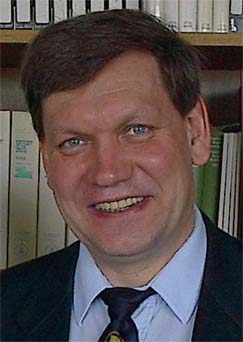
 "Bionics in medicine of the future" - this is the title of a public lecture by Spanish transplantologist Paolo Macchiarini, which will be held on February 24, 2010 in the conference hall of the rector's building of the Sechenov Moscow Medical Academy.    The lecture is organized by Dmitry Zimin foundation  "Dynasty", in collaboration with research foundation "Science for life extension", at whose invitation Paolo Macchiarini  will visit Russia for the first time. 

Bionics - is a completely new approach in modern medicine, a symbiosis of biological and synthetic materials, which can help to build functional organs in the human body.

Paolo Macchiarini managed to achieve just this:  In 2008, Professor  Macchiarini led an international team of scientists who performed the transplantation of  patient trachea grown out of her own stem cells  on donor scaffold in bioreactor. 

Four days later the trachea has taken root so well, that it was difficult to distinguish it from adjacent sections of the respiratory tract.   Just a month later, this trachea brought up its own network of blood supply.

Another unique operation was held in October 2009 - this time the organ was formed inside the patient's body without the use of bioreactor. 

Professor Macchiarini  is  convinced that the regeneration of organs, the formation of an entire organ or a part of it inside the human body can solve almost all problems that modern medicine still can not resolve.  In his opinion, this will become possible very soon - within five years.  In order to do this, we must create an infrastructure that would integrate scientific research in this area with medical practice.  That is he is actively engaged in, promoting achievements and opportunities of regenerative medicine, as a scientist and a surgeon in one person. 

Macchiarini pace of life is immeasurable - he manages to visit several countries in a week, where h operates or makes presentations.  As recently as early this year, he received a new assignment - the post of head of the department of thoracic and regenerative surgery and biotransplantation at the University of Florence, where under his leadership the bionics is being born now - medicine of the future.

But it should be, at least pan-European system, so the professor continues to operate in Barcelona, and continues scientific work at University College London.  And now he drew his attention to Russia and is ready to cooperate with our clinics, so that this approach be developed here.   The first step - holding a master class in regenerative medicine for Russian specialists in cellular technology, transplantologists, which is organized by  Foundation "Science for Life Extension" on February 19,  in collaboration with Russian Academy of Medical Sciences.   Applications for participation are coming from dozens of institutes and laboratories of Moscow, St. Petersburg, Novosibirsk and Ekaterinburg.

And what tasks the bionics should accomplish in one, five or ten years - is a subject of upcoming discussion between Paolo Macchiarini and the staff of the Russian research  Foundation "Science for Life Extension."    The product of such discussion will be a section "Bionics", which will be included into a comprehensive interdisciplinary research program "Science against aging."


Home:
Longevity Science Blog
and
Bionics in medicine of the future
Shorter weblink:
http://tinyurl.com/y8n7ydg


.

Labels: , , , , , ,

Wednesday, December 16, 2009

New Interview on Aging and Longevity Studies

See also:
-- 'Books Forum' blog
-- 'Health Studies' blog


Greetings,

We are pleased to share with you our new interview given to a popular-scientific journal recently. It is planned to be published in January next year. Comments and suggestions are welcome!


1. You are a proponent of the virtually unlimited lifespan hypothesis, based on the engineering model of human damage-ability and repair-ability. What is the strongest evidence in support of this view? How soon can we expect implementation of therapies based on this paradigm?
Yes, we believe that there is no fixed upper limit to the duration of human life, and the evidence in support of this view is presented in our scientific book "The Biology of Life Span" ( http://tinyurl.com/3apdj9 ). Specifically, a section in this book entitled "Is there a species-specific life span limit?" (pages 125-132) presents data on human mortality at advanced ages, which are incompatible with the idea of absolute upper limit to human life span. Instead of anticipated catastrophic growth of death rates with age, as we approach to a hypothetical longevity "brick wall", the death rates actually grow slower than predicted (the phenomenon of the so-called "late-life mortality deceleration" and "late-life mortality leveling-off"). Thus the limits to human longevity are of probabilistic rather than deterministic nature.
As for the time schedule for implementation of anti-aging interventions, our position on this topic is published in the scientific magazine "Journal of Anti-Aging Medicine", 2002, 5(3): 255-263 ( http://longevity-science.org/Interview-JAAM.pdf ). In short, it looks like the rates of aging had already started to decline in developed countries after 1950s, presumably because of better control over chronic inflammation and micronutrient/vitamin deficiency, helping to decrease the rates of age-related degeneration. In other words, there is a significant plasticity of the aging process, allowing some positive interventions against it even today. Of course, we can expect implementation of much more efficient anti-aging therapies in the future, depending on the level of research funding in this area.

2. What is the current ideological picture of your field of study? We have seen lots of criticism aimed at views, like the one above, especially against A. de Grey's SENS. Is the tide turning?
Recently a new international research foundation has been established in Russia, named the ""Science for Life Extension" Foundation (http://www.scienceagainstaging.org/).
This foundation has developed a detailed research program named "Science against Aging"
( http://www.scienceagainstaging.org/Books/Program_ENG_06_2009_razv.pdf )

As for Dr. Aubrey de Grey, and his activities, he recently organized an international scientific SENS4 conference on anti-aging interventions in Cambridge, UK with hundreds of participants and reputable scientists. Detailed proceedings of this conference will be published in the scientific journal "Rejuvenation Research" early next year.

3. So, turning 100 depends on being a farmer and having at least four children. And city folks rarely live that long. What are the predictors for a long and healthy life today (bar cycling, of course :)? A few simple rules for longer life?
We have found that people born to younger mothers (younger than 25 years) have almost twice higher chances to live to 100 years, compared to later born siblings (brothers and sisters) born within the same family. This research finding is published in a peer-reviewed professional magazine "North American Actuarial Journal", 2007, 11(1): 49-67 ( http://longevity-science.org/Centenarians-NAAJ-2007.pdf ).

4. In reference to the above - haven't advances in medical care been outweighed by the proliferation of life-shortening factors (pollution, stress etc.)?
Yes, life expectancy can decrease in developed countries, as it was observed in Russia recently. Our study on this topic is published in peer-reviewed professional journal Population Research and Policy Review, 2008, 27: 551-574. ( http://longevity-science.org/pdf/Russia-PRPR-2008.pdf ).

5. Your research shows that in a few decades elderly people (60+) will become a massive 30 percent in Europe, Bulgaria being an especially extreme case. If your expectations that we can live 5000+ years prove true, the world may soon fill with centenarians (and later - with millenarians). What societal and economic changes can we expect in the short and the long run?
We do not expect that people will live 5000+ years any time soon. It should take at least 5000+ more years in order this to happen. Instead we anticipate incremental progress, when the onset of age-related diseases, disability and frailty is delayed through new anti-aging interventions. Our study on demographic consequences of defeating aging will be published in the scientific journal "Rejuvenation Research" early next year. When it happens, we will be able to provide more comments on this topic.

Meanwhile we would like to invite the readers to look for additional information at our scientific website 'Unraveling the Secrets of Human Longevity' (http://longevity-science.org/ ), and to participate in further discussions at our blog 'Longevity Science' (http://longevity-science.blogspot.com/ ).
-----------

Any comments and suggestions are welcome!

Please feel free to post your comments and suggestions below by clicking here.

Home:
Longevity Science Blog
and
New Interview on Aging and Longevity Studies
Shorter weblink:
http://tinyurl.com/yfv7jjm


.

Labels: , , , , , ,

Monday, May 11, 2009

News from the 'Science for Life Extension' Foundation: Aging -- not a destiny!

See also:
-- 'Books Forum' blog
-- 'Health Studies' blog


Greetings,

Recently the 'Science for Life Extension' Foundation has published an interesting news announcement at its website here:

http://www.scienceagainstaging.com/News/news_07.html

For your convenience this Russian text is translated into English below:

Aging -- not a destiny!

Charity evening meeting, April 17, 2009, Moscow.
At this charity event the presentation was made, describing the work of the 'Science for Life Extension' Foundation and its objectives.


Aging -- not a destiny! This was the title of a charitable meeting of the Foundation 'Science for Life Extension', which took place in a comfortable informal environment of the Tsurtsum Cafe at the Winery place (Moscow, Russia). It is this environment, which provided an opportunity for guests to absorb the vast amount of knowledge about human aging, and about the opportunities offered, and to be offered by science to combat it.

The purpose of the meeting - to allow guests (which were people of many different professions - politicians, businessmen, designers, representatives of the various foundations) to learn as much about aging as possible, and to learn that aging could be defeated in the foreseeable future. Knowledge leads to action, and therefore the second goal of the Foundation 'Science for Life Extension' was to get as many supporters and partners as possible.

The chairman of the Board of Trustees of the Foundation, Michael Batin shared with guests his plans, and the most important of them - the development of an integrated interdisciplinary program 'Science against aging', which the Foundation is being developing for a year already, inviting contributions from leading researchers in Russia and abroad. Among the guests of the meeting were the Foundation's experts, internationally recognized scientists: Leonid Gavrilov and Natalia Gavrilova, Alexei Olovnikov, Vladimir Skulachev and Maxim Skulachev.

The program is a set of research tasks for different scientific disciplines in the study of mechanisms of aging and life extension. This work unprecedented in world science has already been highly evaluated by international scientific community. The second working version of the program was published in February 2009, the next version will be released in May and it will be presented at the International Congress of Gerontology and Geriatrics (IAGG) in Paris.

Still this is only the beginning of the work, which will transform the program into a comprehensive document that would serve as both a guide and a tool not only for scientists but also for politicians, policy makers, and national governments, to ensure that the fight against aging follows a coherent strategic plan. Michael Batin announced the budget expenses, which are necessary to complete the first phase of program creation: ten million Russian rubles, of which three million - are the funds of the Foundation itself and seven million - the requested support from investors.


To see short version of the Presentation click here.

Download the full version of the Presentation
in Microsoft PowerPoint 2007 format (6,5 Mb)

See Photos from the Charity meeting

Also you are cordially invited to participate in discussion of this new 'Science Against Aging' Research Plan:

http://longevity-science.org/SCIENCE_AGAINST_AGING_RESEARCH_PLAN.pdf
Shorter weblink:
http://tinyurl.com/df2kvg

To read comments on this topic and to participate in further discussions by posting your own thoughts and suggestions, you are welcome to click here.


Key words:
Science Against Aging, Science for Life Extension, 'Science for Life Extension' Foundation,Aging - not a destiny!, Michael Batin, Leonid Gavrilov, Natalia Gavrilova, Alexei Olovnikov, Vladimir Skulachev, Maxim Skulachev, Program 'Science against aging', International Congress of Gerontology and Geriatrics (IAGG), ageing, aging, anti-aging, Life Extension, Longevity

Home:
Longevity Science Blog
and
News from the 'Science for Life Extension'Foundation: Aging -- not a destiny!
Shorter weblink:
http://tinyurl.com/oqjq4t


Meeting Photo:

Chairman of the Board of Trustees of the 'Science for Life Extension' Foundation, Michael Batin, shared his ambitious plans with the guests (see below).


.

Labels: , , , , , , , ,

Thursday, April 02, 2009

'Science Against Aging' Research Plan -- Invitation to Discussion

See also:
-- 'Books Forum' blog
-- 'Health Studies' blog


Dear All:

You are cordially invited to participate in discussion of a new 'Science Against Aging' Research Plan:

http://longevity-science.org/SCIENCE_AGAINST_AGING_RESEARCH_PLAN.pdf
Shorter weblink:
http://tinyurl.com/df2kvg

The authors of this program wrote:

Please, answer 12 basic questions on the biology of ageing:

1. Why are organisms exposed to progressive and irreversible reduction of physiological functions in the final period of their lives?

2 . Why do life expectancy and speed of aging differ within one species and across species?

3. Why does experimental treatment such as caloric restriction delay a great number of age-related physiological and pathological changes and increase the average and maximum life duration in animals?

4. Do these factors affect aging and age-associated diseases independently from one another?

5. Do age-related changes in the organism increase the exposure to diseases or do diseases develop independently and only later exacerbate the manifestations of aging?

6. What are, in your view, possible points of a scientific breakthrough in research aimed at increase of longevity?

7. At what evolutionary phase did aging arise or, alternatively, has it accompanied life since its inception?

8. Are the aging processes of an organism caused by aging at the cell level?

9. To what extent are aging processes conditioned genetically?

10. Why do species with 'negligible' aging exist?

11. Are reproduction and life expectancy interrelated or independent from each other?

12. What other questions may be crucial for understanding the mechanisms of aging?


The authors of this program also invited to comment on the sections of their Research Plan:

Section 1
Fundamental Mechanisms of Aging. Main Research Areas

Section 2
Genetics of Lifespan and Aging. Main Research Directions

Section 3
Metabolic Aspects of Aging and Longevity. Main Research Directions

Section 4
Immunity and Aging. Main Research Directions

Section 5
Stem Cells and Aging. Main Research Directions

Section 6
Application of Stem Cells in Geriatrics & Gerontology. Main Research Directions

Section 7
Medicated Geroprotection. Main Research Directions

Section 8
Geroprotectors Efficiency Research. Main Research Directions

Section 9
Identification of the Molecular Markers in Aging. Selected Clauses

Section 10
Mathematical Modelling of the Life Span, Longevity and Aging. Main Research Directions

Section 11
Microecology and Aging. Main Research Directions

Section 12
Reproduction and Aging. Selected Research Directions

Section 13
Environmental Influence on Aging. Selected Research Directions


The Word "doc" version of the entire Program is available at:

http://longevity-science.org/SCIENCE_AGAINST_AGING_RESEARCH_PLAN.doc
Shorter weblink:
http://tinyurl.com/c7e358

Please feel free to post your comments and suggestions below by clicking here.


Key words:
Science Against Aging, Fundamental Mechanisms of Aging, Genetics of Lifespan and Aging, Metabolic Aspects of Aging and Longevity, Immunity and Aging, Stem Cells and Aging, Application of Stem Cells in Geriatrics & Gerontology, Medicated Geroprotection, Geroprotectors Efficiency, Molecular Markers in Aging, Mathematical Modelling of the Life Span, Longevity and Aging; Microecology and Aging; Reproduction and Aging; Environmental Influence on Aging


Home:
Longevity Science Blog
and
'Science Against Aging' Research Plan -- Invitation to Discussion
Shorter weblink:
http://tinyurl.com/cxhxs8


.

Labels: , , , , , , , ,