Wednesday, March 04, 2009

Human Aging Starts Before Birth

See also:
-- 'Books Forum' blog
-- 'Health Studies' blog


Greetings,

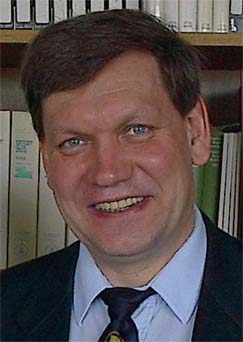
Here is an interesting interview given by British scientist Dr. Aubrey de Grey to a Russian newspaper "Novaya Gazeta" [New Newspaper], which is related to his recent scientific visit to Russia.

The title of this new story is "Human Aging Starts Before Birth", and it is published in Russian language. Some excerpts from this publication are translated in English and attached below:
Question from Reporter (Elena Kokurina):
- Dr. de Grey, there are many debates among scientists regarding aging. The question is not even about the methods of fighting with it, but rather what is aging in the first place. For example, why is it manifesting itself precisely at the end of life?

Answer by Dr. Aubrey de Grey:
- I believe, because the normal process of metabolism, which keeps us alive, produces cumulated side effects. Such as the loss of cells or the formation of “indigestible” molecules. For some period of time this damage is rather limited and it cannot affect the organism as a whole, but in the long run the damage becomes so extensive that the physiological functions deteriorate sharply.

However, the very process of aging process starts well before our birth, as it is demonstrated by recent studies. The first signs of atherosclerosis can be found even in newborn. Recently Leonid and Natalia Gavrilovs, the Russian researchers working in the USA, proved that starting at birth we already accumulate many defects, which are the beginning of aging.

Also here is the original Russian text for these excerpts:

Елена Кокурина:
— Д-р Ди Грей, среди ученых много разногласий по поводу старения. Речь идет даже не столько о методах борьбы с ним, сколько о том, что это такое. Например, почему оно проявляется именно в конце жизни?

Обри Ди Грей:
— Я считаю, из-за того что нормальные процессы обмена веществ в организме, благодаря которым мы живем, дают накапливающиеся побочные эффекты. Такие как потеря клеток или образование «неперевариваемых» молекул. Длительное время эти повреждения носят частный характер и не способны воздействовать на организм в целом, но, в конце концов, их становится столько, что физиологические функции резко ухудшаются.

Однако сам процесс старения начинается, как показывают последние исследования, еще до нашего рождения. Первые признаки атеросклероза можно найти даже у новорожденного. Недавно Леонид и Наталья Гавриловы, российские исследователи, работающие в США, доказали, что уже с рождения мы аккумулируем множество дефектов, которые являются началом старения.

Automatic computer translation of the entire interview could be found through the Bable Fish translator and the Google translator as well.

To read comments on this story, and to post your own thoughts, click here

See also:

- Старение: как отменить приговор?

- Смерти можно дать пивком под зад

- Технологии, способные остановить старение, могут быть разработаны в ближайшем будущем

- Бессмертие человека не за горами
- Бессмертие человека не за горами,Interesting discussion


Pictures:
- Обри ди Грей,1
- Обри ди Грей,2
- Обри ди Грей,3
- Обри ди Грей,4

Key words:
SENS, Life-Extension, Aubrey de Grey, rejuvenation research, Leonid Gavrilov, Natalia Gavrilova, Strategies for Engineered Negligible Senescence, anti-ageing, anti-aging, ageing, aging, longevity, Novaya Gazeta, Elena Kokurina, Russia, Елена Кокурина,Обри Ди Грей


Home:
Longevity Science Blog
and
Human Aging Starts Before Birth
Shorter weblink:
http://tinyurl.com/cfn4tf


.

Labels: , , , , , , , , , , , ,

Tuesday, February 17, 2009

Upcoming Meeting on Life-Extension (SENS) in England, September 2009

See also:
-- 'Books Forum' blog
-- 'Health Studies' blog


Dear All:

Here is an interesting announcement I have got recently about the upcoming meeting on life-extension (SENS) in Cambridge, England, September 3-7, 2009:
My apologies if you receive this email more than once. Please forward it to any colleagues who you feel may be interested.

I am writing to notify you that registration and abstract submission are now open for the fourth Strategies for Engineered Negligible Senescence (SENS) conference, to be held at Queens' College, Cambridge, England on September 3rd-7th 2009. The early registration and abstract submission deadlines are both June 15th. All details, including forms for abstract submission and online registration, are at the conference website:

http://www.mfoundation.org/sens4

The preliminary program already has 35 confirmed speakers, all of them world leaders in their field. As for previous SENS conferences, the emphasis of this meeting is on "applied gerontology" - the design and implementation of biomedical interventions that may, jointly, constitute a comprehensive panel of rejuvenation therapies, sufficient to restore middle-aged or older laboratory animals (and, in due course, humans) to a youthful degree of physiological robustness. The list of sessions and confirmed speakers is as follows:

Making metabolism less harmful:
Vladimir Skulachev, Holly Brown-Borg, Stephen Spindler, Stephen Vatner

Spontaneous regeneration:
Brandon Reines, Jonathan Tilly, Alexandra Stolzing

Eliminating recalcitrant intracellular molecules:
William Sly, Ana Maria Cuervo, John Schloendorn, Claude Wischik, Martin Hetzer

Rejuvenating extracellular material:
Nik Nikitin, Mark Pepys, Sudhir Paul, Mark Noble, Kendall Houk

Novel anti-cancer approaches:
Paul Hallenbeck, Adela Ben-Yakar, Vera Gorbunova, Maria Blasco, David Keefe

Rejuvenating the immune system:
Janko Nikolich-Zugich, Anne de Groot

ES-like cells and cell therapy:
Justin Ichida, Ilham Abuljadayel, Thomas Zwaka, Daniel Kraft, John Sladek, Dan Gazit

Tissue engineering:
Augustinus Bader, Gabor Forgacs

The defeat of aging and its consequences:
Philip Moriarty, Tanya Jones, Leonid Gavrilov

In addition, there will be at least a dozen short talks selected from submitted abstracts, as well as poster sessions each evening. Authors of short talks and posters will, like the invited speakers, be invited to submit a paper summarising their presentation for the proceedings volume, which will be published in the high-impact journal Rejuvenation Research early in 2010.

Please note that registration fees are fully inclusive of accommodation and all meals. Those not requiring accommodation, and journalists wishing to obtain free press passes (not including accommodation) are asked to contact me by email (aubrey@sens.org).

I hope to welcome you to Cambridge in September!

Cheers, Aubrey

Aubrey de Grey
Organiser, SENS4
Chairman and Chief Science Officer, Methuselah Foundation
Editor-in-Chief, Rejuvenation Research

-------------END--------------------


Key words:
SENS, Life-Extension, Aubrey de Grey, rejuvenation research, Leonid Gavrilov, Strategies for Engineered Negligible Senescence, anti-ageing, anti-aging, ageing, aging, longevity


Home:
Longevity Science Blog
and
Upcoming Meeting on Life-Extension (SENS) in England, September 2009
Shorter weblink:
http://tinyurl.com/bhgevj


.

Labels: , , , , , , , , , ,

Sunday, February 24, 2008

New Attack on SENS Life-Extension Project and Aubrey de Grey

Greetings,

Here is a new turn in hot scientific debates over the SENS Life-Extension Project, and Dr. Aubrey de Grey activities in rejuvenation research:

Recently a new chapter came out in a book published by the Springer publisher:

Annual Review of Gerontology and Geriatrics:
Biopsychosocial Approaches to Longevity

by Leonard W. Poon and Thomas T. Perls
http://tinyurl.com/2opjy6
(Hardcover - Dec 12, 2007)


Chapter 3 of this book entitled "The Promise of Human Life Span Extension" and written by Dr. Preston W. Estep III, contains the following section:

"SENS Brings Neo-Lysenkoism to Longevity Research"

Here are some excerpts:

"Agenda-driven pseudoscience like SENS has a clearly stated goal, but wishful thinking and extrascientific considerations, such as political or fundraising power, are placed ahead of and are often incompatible with scientific evidence.

There have been many examples of agenda-driven science, but SENS is strikingly similar to Lysenkoism, a name given to the pseudoscientific misdirection of Soviet Biology lead by Trofim Lysenko."
[in Stalin period]

Stay tuned for the response from Aubrey de Grey !

Key words:
New books, SENS, Life-Extension, Aubrey de Grey, rejuvenation research, Springer, Trofim Lysenko, Preston Estep, Neo-Lysenkoism, Leonard Poon,Thomas Perls

Do you have any comments on this topic?
Post them below by clicking here !


Home:
Longevity Science Blog
and
New Attack on SENS Life-Extension Project and Aubrey de Grey
Shorter weblink:
http://tinyurl.com/26yclt


.

Labels: , , , , , , , , , ,

Saturday, January 19, 2008

Peter Thiel profile and Anti-Aging Studies

Greetings,

Recently an interesting biographic profile of Peter Thiel was published in the article "Why you should beware of Facebook" by the Australian magazine "The Age" on January 20, 2008. This is interesting because Peter Thiel made a very generous donation for anti-aging studies, so it helps to know more about this wealthy philanthropist capable to transform the pace of anti-aging and longevity studies. The profile is written in a somewhat skeptical way, and perhaps maybe incomplete and even inaccurate in some parts -- you are most welcome to post your additions and corrections below by clicking here.

Here are some excerpts:
"Although the [Facebook] project was initially conceived by media cover star Mark Zuckerberg, the real face behind Facebook is the 40-year-old Silicon Valley venture capitalist and futurist philosopher Peter Thiel. There are only three board members on Facebook, and they are Thiel, Zuckerberg and a third investor called Jim Breyer, from a venture capital firm called Accel Partners (more on him later). Thiel invested $US 500,000 in Facebook when Harvard students Zuckerberg, Chris Hughes and Dustin Moskowitz went to meet him in San Francisco in June 2004, soon after they had launched the site. Thiel now reportedly owns 7% of Facebook, which, at Facebook's current valuation of $US 15 billion ($A 16.65 billion), would be worth more than $US 1 billion. There is much debate on who exactly were the original co-founders of Facebook, but whoever they were, Zuckerberg is the only one left on the board, although Hughes and Moskowitz still work for the company.

Thiel is widely regarded in Silicon Valley and in the US venture capital scene as a libertarian genius. He is the co-founder and CEO of the virtual banking system PayPal, which he sold to eBay for $US 1.5 billion, taking $US 55 million for himself. He also runs a £3 billion ($A 6.5 billion) hedge fund called Clarium Capital Management and a venture capital fund called Founders Fund. Bloomberg Markets magazine recently called him "one of the most successful hedge fund managers in the country". He has made money by betting on rising oil prices and by correctly predicting that the dollar would weaken. He and his absurdly wealthy Silicon Valley mates have recently been labelled "The PayPal Mafia" by Fortune magazine, whose reporter also observed that Thiel has a uniformed butler and a $US 500,000 McLaren supercar. Thiel is also a chess master and intensely competitive. He has been known to sweep the chessmen off the table in a fury when losing. And he does not apologise for this hyper-competitiveness, saying: "Show me a good loser and I'll show you a loser."

But Thiel is more than just a clever and avaricious capitalist. He is a futurist philosopher and neocon activist. A philosophy graduate from Stanford, in 1998 he co-wrote a book called The Diversity Myth, which is a detailed attack on liberalism and the multiculturalist ideology that dominated Stanford. He claimed that the "multiculture" led to a lessening of individual freedoms. While a student at Stanford, Thiel founded a right-wing journal, still up and running, called The Stanford Review ­ motto: Fiat Lux ("Let there be light"). Thiel is a member of TheVanguard.Org, an internet-based neoconservative pressure group that was set up to attack MoveOn.org, a liberal pressure group that works on the web. Thiel calls himself "way libertarian".

TheVanguard is run by one Rod D. Martin, a philosopher-capitalist whom Thiel greatly admires. On the site, Thiel says: "Rod is one of our nation's leading minds in the creation of new and needed ideas for public policy. He possesses a more complete understanding of America than most executives have of their own businesses."

This little taster from their website will give you an idea of their vision for the world: "TheVanguard.Org is an online community of Americans who believe in conservative values, the free market and limited government as the best means to bring hope and ever-increasing opportunity to everyone, especially the poorest among us." Their aim is to promote policies that will "reshape America and the globe". TheVanguard describes its politics as "Reaganite/Thatcherite". The chairman's message says: "Today we'll teach MoveOn (the liberal website), Hillary and the left-wing media some lessons they never imagined."

SO, THIEL'S POLITICS ARE not in doubt. What about his philosophy? I listened to a podcast of an address Thiel gave about his ideas for the future. His philosophy, briefly, is this: since the 17th century, certain enlightened thinkers have been taking the world away from the old-fashioned nature-bound life, and here he quotes Thomas Hobbes' famous characterisation of life as "nasty, brutish and short", and towards a new virtual world where we have conquered nature. Value now exists in imaginary things. Thiel says that PayPal was motivated by this belief: that you can find value not in real manufactured objects, but in the relations between human beings. PayPal was a way of moving money around the world with no restriction. Bloomberg Markets puts it like this: "For Thiel, PayPal was all about freedom: it would enable people to skirt currency controls and move money around the globe."

Clearly, Facebook is another uber-capitalist experiment: can you make money out of friendship? Can you create communities free of national boundaries ­ and then sell Coca-Cola to them? Facebook is profoundly uncreative. It makes nothing at all. It simply mediates in relationships that were happening anyway.

Thiel's philosophical mentor is one Rene Girard of Stanford University, proponent of a theory of human behaviour called mimetic desire. Girard reckons that people are essentially sheep-like and will copy one another without much reflection. The theory would also seem to be proved correct in the case of Thiel's virtual worlds: the desired object is irrelevant; all you need to know is that human beings will tend to move in flocks. Hence financial bubbles. Hence the enormous popularity of Facebook. Girard is a regular at Thiel's intellectual soirees. What you don't hear about in Thiel's philosophy, by the way, are old-fashioned real-world concepts such as art, beauty, love, pleasure and truth.

The internet is immensely appealing to neocons such as Thiel because it promises a certain sort of freedom in human relations and in business, freedom from pesky national laws, national boundaries and suchlike. The internet opens up a world of free trade and laissez-faire expansion. Thiel also seems to approve of offshore tax havens, and claims that 40% of the world's wealth resides in places such as Vanuatu, the Cayman Islands, Monaco and Barbados. I think it's fair to say that Thiel is against tax. He also likes the globalisation of digital culture because it makes the banking overlords hard to attack: "You can't have a workers' revolution to take over a bank if the bank is in Vanuatu," he says.

If life in the past was nasty, brutish and short, then in the future Thiel wants to make it much longer, and to this end he has also invested in a firm that is exploring life-extension technologies. He has pledged £3.5 million to a Cambridge-based gerontologist called Aubrey de Grey, who is searching for the key to immortality. Thiel is also on the board of advisers of something called the Singularity Institute for Artificial Intelligence. From its fantastical website, the following: "The Singularity is the technological creation of smarter-than-human intelligence. There are several technologies … heading in this direction … Artificial Intelligence … direct brain-computer interfaces … genetic engineering … different technologies which, if they reached a threshold level of sophistication, would enable the creation of smarter-than-human intelligence."

Source:
"Why you should beware of Facebook"
by the Australian magazine "The Age" on January 20, 2008.

Book written by Peter A. Thiel:
The Diversity Myth
by David O. Sacks and Peter A. Thiel
Foreword by Elizabeth Fox-Genovese


Any comments, additions, corrections?
You are most welcome to post your additions and corrections below by clicking here.

Home:
Longevity Science Blog
and
Peter Thiel profile and Anti-Aging Studies
Shorter weblink:
http://tinyurl.com/329hd7

.

Labels: , , , , ,

Friday, June 08, 2007

New Books!

See also:
New Books for August 2007
New Books for July 2007
New Books for June 2007
New Books for May 2007


Greetings,

I am pleased to share with you the list of new published books, organized in the following categories (just click on the titles below):

-- Aging

-- Alzheimer's

-- Anti-Aging

-- Aubrey de Grey Ideas

-- Biomedical Nanotechnology

-- Brain Aging

-- Caloric Restriction

-- Cancer

-- Cardiovascular Health

-- Cryonics

-- Dementia

-- Diabetes

-- Estrogen

-- Genetics of Aging and Health

-- Geriatrics

-- Growth Hormone

-- Hormones

-- Human Longevity

-- Immortality

-- Life Expectancy

-- Life Extension

-- Menopause

-- Mortality

-- Nursing

-- Population Aging

-- Regenerative Medicine

-- Rejuvenation

-- Resveratrol

-- SENS: Strategies for Engineered Negligible Senescence

-- Soft Drinks

-- Stem Cell Therapy

-- Supplements

-- Testosterone

-- Vitamins

Hope this helps!

Labels: , , , , , , , , , , , , , ,

Wednesday, February 07, 2007

SENS 3

Scientific Program of the upcoming third conference "Strategies for Engineered Negligible Senescence" (SENS), Cambridge, England, September, 2007.


Greetings,

I am pleased to get an e-mail message from the organizer of the third Strategies for Engineered Negligible Senescence (SENS) conference, Dr. Aubrey de Grey, which in fact represents a public announcement to share:


I am writing to notify you that registration and abstract submission are now open for the third Strategies for Engineered Negligible Senescence(SENS) conference, to be held at Queens' College, Cambridge, England on September 6th-10th 2007. The early registration and abstract submission deadlines are both June 15th. All details, including forms for abstract submission and online registration, are at the conference website:

http://www.sens.org/sens3/

The preliminary program already has 48 confirmed speakers, all of them world leaders in their field. As for previous SENS conferences, the emphasis of this meeting is on "applied gerontology" -- the design and implementation of biomedical interventions that may, jointly, constitute a comprehensive panel of rejuvenation therapies, sufficient to restore middle-aged or older laboratory animals (and, in due course, humans) to a youthful degree of physiological robustness. The list of sessions and confirmed speakers is as follows:

New pharmaceutical interventions in aging: Patrizia D'Alessio, Laura Dugan, Randy Strong

Immunotherapy against cancer: Zheng Cui, Robert Hawkins, Claudia Gravekamp

Persistent viruses in aging: Ruth Itzhaki, Ed Mocarski, Rita Effros, Arne Akbar

Protecting the brain (genes and delivery): Elizabeth Corder, Pedro Alvarez

Damage to long-lived intracellular molecules: Sataro Goto, Kim Janda, Paola Scaffidi

Non-insertional gene therapy: Nicola Philpott, Michele Calos, Fyodor Urnov

Rescue of mitochondrial mutations: Ian Holt, Marisol Corral-Debrinski, Volkmar Weissig, Samit Adhya

Telomeres and cell senescence: Mary Perry, Gillian Butler-Browne, Lenhard Rudolph, Walter Berger

Non-specific nuclear DNA damage in aging: Jan Vijg, Michael Siciliano, Aubrey de Grey

Deriving autologous embryonic stem cells: Chang-Kyu Lee, Wolfgang Engel, Miodrag Stojkovic

Regeneration of complex structures: Stephen Minger, Chris Mason, David Gardiner

Eliminating beta-amyloid: Ashley Bush, Beka Solomon, Yoh Matsumoto, David Morgan

Repair and turnover of extracellular material: Robin Franklin, Dwight Towler, Cato Laurencin

Long-term goals of biomedical gerontology: Chris Phoenix, Ben Best, Ray Kurzweil

Outreach to key communities: Linda Powers, Michael Rose, Huber Warner, Bernard Siegel

In addition, there will be at least a dozen short talks selected from submitted abstracts, as well as poster sessions each evening. Authors of short talks and posters will, like the invited speakers, be invited to submit a paper summarising their presentation for the proceedings volume, which will be published in the nigh-impact journal Rejuvenation Research early in 2008.

Please note that registration fees are fully inclusive of accommodation and all meals.

I hope to welcome you to Cambridge in September!

Cheers, Aubrey

Aubrey de Grey
Organiser, SENS 3
Chairman and Chief Science
Officer, Methuselah Foundation
Editor-in-Chief, Rejuvenation Research
(impact factor 8.571)

Labels: , , , , ,

Monday, February 05, 2007

Steve Spindler

Greetings,

Recently a very clever and eloquent comment was posted at this blog. The author of this comment is Professor Steve Spindler. So I went to Medline to see his scientific publications and was pleased to find out that he has published 49 articles on aging and longevity studies in good scientific jounals. Here is a partial list of his most recent publications:

------------------------

1: Dhahbi JM, Tsuchiya T, Kim HJ, Mote PL, Spindler SR. Related Articles, Links
Abstract Gene expression and physiologic responses of the heart to the initiation and withdrawal of caloric restriction.
J Gerontol A Biol Sci Med Sci. 2006 Mar;61(3):218-31.
PMID: 16567370 [PubMed - indexed for MEDLINE]

2: Spindler SR. Related Articles, Links
Abstract Use of microarray biomarkers to identify longevity therapeutics.
Aging Cell. 2006 Feb;5(1):39-50.
PMID: 16441842 [PubMed - indexed for MEDLINE]

3: Dhahbi JM, Mote PL, Fahy GM, Spindler SR. Related Articles, Links
Free Full Text Identification of potential caloric restriction mimetics by microarray profiling.
Physiol Genomics. 2005 Nov 17;23(3):343-50. Epub 2005 Sep 27.
PMID: 16189280 [PubMed - indexed for MEDLINE]

4: Spindler SR. Related Articles, Links
Abstract Rapid and reversible induction of the longevity, anticancer and genomic effects of caloric restriction.
Mech Ageing Dev. 2005 Sep;126(9):960-6. Review.
PMID: 15927235 [PubMed - indexed for MEDLINE]

5: Dhahbi JM, Kim HJ, Mote PL, Beaver RJ, Spindler SR. Related Articles, Links
Free in PMC Temporal linkage between the phenotypic and genomic responses to caloric restriction.
Proc Natl Acad Sci U S A. 2004 Apr 13;101(15):5524-9. Epub 2004 Mar 25.
PMID: 15044709 [PubMed - indexed for MEDLINE]

6: Tsuchiya T, Dhahbi JM, Cui X, Mote PL, Bartke A, Spindler SR. Related Articles, Links
Free Full Text Additive regulation of hepatic gene expression by dwarfism and caloric restriction.
Physiol Genomics. 2004 May 19;17(3):307-15.
PMID: 15039484 [PubMed - indexed for MEDLINE]

7: Dhahbi JM, Mote PL, Cao SX, Spindler SR. Related Articles, Links
Abstract Hepatic gene expression profiling of streptozotocin-induced diabetes.
Diabetes Technol Ther. 2003;5(3):411-20.
PMID: 12828825 [PubMed - indexed for MEDLINE]

8: Spindler SR. Related Articles, Links
Abstract Reversing the negative genomic effects of aging with short-term calorie restriction.
ScientificWorldJournal. 2001 Oct 12;1:544-6. Review.
PMID: 12805847 [PubMed - indexed for MEDLINE]

9: Weindruch R, Keenan KP, Carney JM, Fernandes G, Feuers RJ, Floyd RA, Halter JB, Ramsey JJ, Richardson A, Roth GS, Spindler SR. Related Articles, Links
Abstract Caloric restriction mimetics: metabolic interventions.
J Gerontol A Biol Sci Med Sci. 2001 Mar;56 Spec No 1:20-33. Review.
PMID: 12088209 [PubMed - indexed for MEDLINE]

10: Spindler SR. Related Articles, Links
Abstract Calorie restriction enhances the expression of key metabolic enzymes associated with protein renewal during aging.
Ann N Y Acad Sci. 2001 Apr;928:296-304. Review.
PMID: 11795521 [PubMed - indexed for MEDLINE]

--------------------
It looks like the author is an expert in aging and longevity studies, and therefore his comments should be taken seriously.

Professor Steve Spindler also published book chapters in these scientific books:

Aging of the Organs and Systems
(Biology of Aging and its Modulation)

by Richard Aspinall


Dhahbi, J.M. and Spindler, S.R. Aging of the liver. In, Biology of Aging and its Modulation, Vol. 3: Aging of Organs and Systems , Aspinall, R., ed., Kluwer Academic Publisher, Dordrecht , The Netherlands , pp. 271-291 (2003).


Energy Metabolism and Lifespan Determination (Advances in Cell Aging and Gerontology)
by M.P. Mattson


Spindler, S.R. and Dhahbi, J.M. Protein Turnover, Energy Metabolism, Aging and Caloric Restriction. In, Energy Metabolism and Lifespan Determination: Advances in Cell Aging and Gerontology Vol. 14, Mattson, M.P., ed., Elsevier, Amsterdam , The Netherlands , pp. 69-86 (2003).

Labels: , , , , , ,

Friday, January 26, 2007

SENS

SENS stands for
Strategies for Engineered Negligible Senescence
scientific initiative

See also:
What is Aging? Anti-Aging Is Immortality Possible?


To Read comments on this topic and post your own thoughts, click here


Greetings,

Recently Steve Connor, the science editor of 'The Independent' has published an interesting review of a new popular book "How to Live Forever or Die Trying", by Bryan Appleyard.

The review is critical, which is understandable for evaluations of a popular book, but I am struck by the following comment about the life-extension researcher, Dr. Aubrey de Grey:


"... de Grey's belief in immortality - or "strategies for engineered negligible senescence" - are something of a laughing-stock among mainstream gerontologists"

Well, all you need to do is just to take a look at this scientific book below, which contains research publications by over a hundred of mainstream gerontologists, with Dr. Aubrey de Grey being a Scientific Editor (!):

Strategies for Engineered Negligible Senescence:
Why Genuine Control of Aging May Be Foreseeable
(Annals of the New York Academy of Sciences)


Obviously, the "strategies for engineered negligible senescence" (SENS) are not a laughing-stock any longer among mainstream gerontologists, and many of them do participate in this scientific initiative.

Also read the relevant consensus letter "Antiaging Technology and Pseudoscience" signed by seven experts and published in Science, which acknowledges the legitimacy of anti-aging studies and cites the list of these anti-aging scientific publications. Please note that the first author of this published consensus letter is Dr. Aubrey de Grey.
This Science letter was later cited in a prestigious 2003 Macmillan Encyclopedia of Population, USA with a comment: "...the possibility should not be excluded that current intensive biomedical anti-aging studies may help to extend the healthy and productive period of human life in the future (de Grey et al., 2002)."

My personal attitude to the SENS scientific initiative could be best characterized with a quote by George Bernard Shaw (1856-1950):


"The reasonable man adapts himself to the world;

the unreasonable one persists in trying to adapt the world to himself."

"Therefore, all progress depends on the unreasonable man."


See also: New Books Discussing SENS


Disclaimer for a potential conflict of interest
We have published three articles in this SENS book, so we do know what we are talking about:


Gavrilov LA, Gavrilova NS. Early-Life Programming of Aging and Longevity: The Idea of High Initial Damage Load (the HIDL Hypothesis). Annals of the New York Academy of Sciences, 2004, 1019: 496-501.

Gavrilova NS, Gavrilov LA, Semyonova VG, Evdokushkina GN. Does Exceptional Human Longevity Come With High Cost of Infertility? Testing the Evolutionary Theories of Aging. Annals of the New York Academy of Sciences, 2004, 1019: 513-517.

Gavrilov LA, Gavrilova NS. The Reliability-Engineering Approach to the Problem of Biological Aging. Annals of the New York Academy of Sciences, 2004,
1019: 509-512.

Also I have to admit that I am one of seven coauthors of the above mentioned consensus letter "Antiaging Technology and Pseudoscience" published in Science.

See also:
What is Aging? Theories of Aging Anti-Aging Population Aging


Read further comments, and post your own thoughts here

Labels: , ,